FLOATING
FUTURE
Hemp-Based Modular Homes Built to Rise
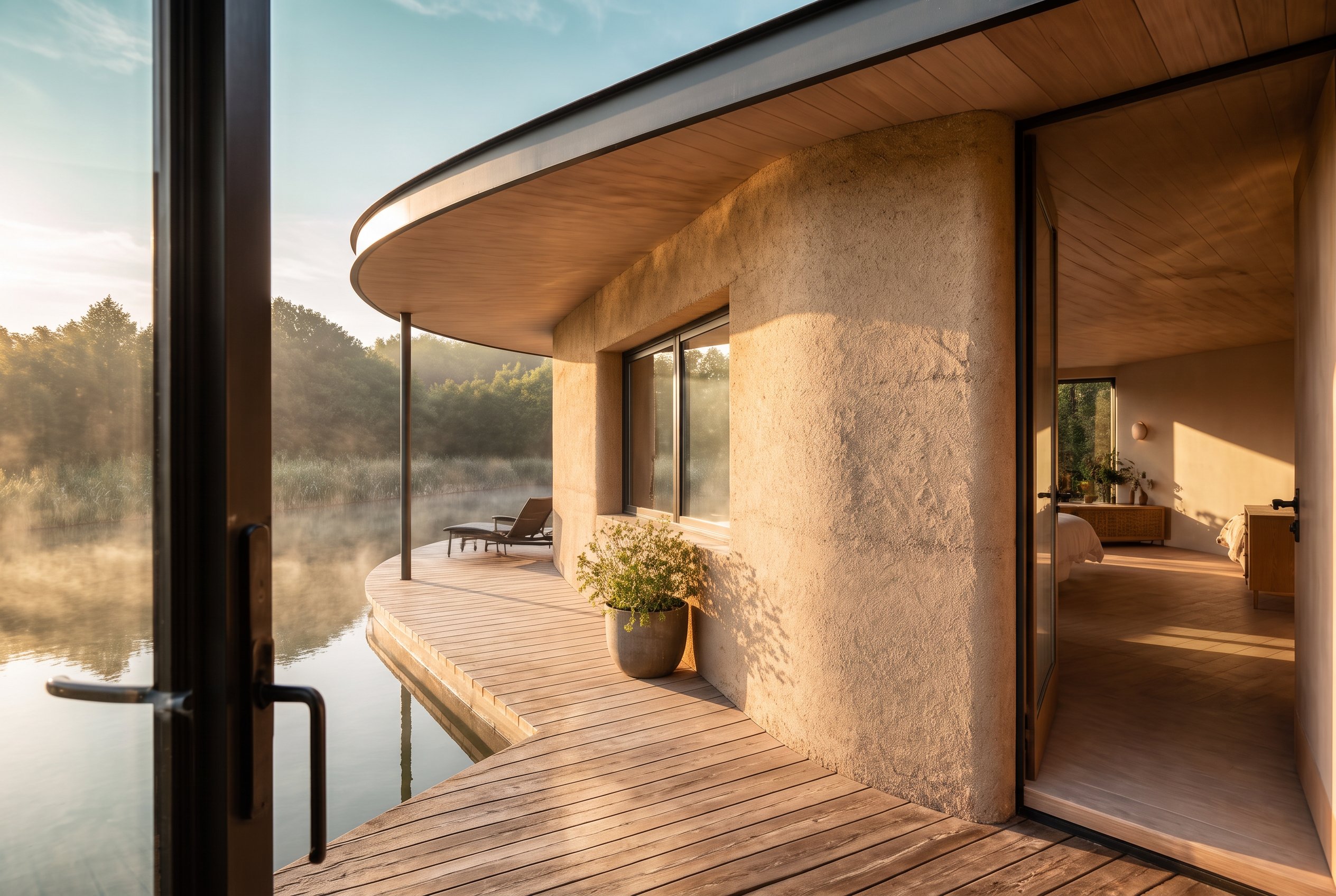
Advanced manufacturing, regenerative materials and marine engineering come together in a new housing platform designed for life on water.
- Lower Carbon
- Flood Adaptive
- Modular & Scalable
- Healthy Living
Not a houseboat. A housing platform.
Floating Future is designed for waterfronts, canals, lakes, marinas, flood-prone districts and climate-adaptive communities.
Floating Future combines a 3D-printed low-carbon mineral envelope, hemp insulation, lightweight bio-composites and marine-engineered flotation. The result is a repeatable housing system designed to use fewer resources, adapt to changing water levels and scale from a single dwelling to an entire floating neighborhood.
Marine engineering below. Bio-based architecture above.
- 01Home module
- 02Floating chassis
- 03Shared dock
- 04Neighborhood network
The blueprint, in 88 seconds.
A short film walking through the whole idea — from flood-prone districts and the limits of land-based housing, to the modular floating system and the neighborhood it grows into.
Press play — sound on for the full story.
The Blueprint for Climate-Adaptive Floating Homes — 1:28
Hemp is used where hemp performs best.
Lightweight
Hemp hurd reduces superstructure mass, which can improve buoyancy efficiency and reduce required pontoon displacement.
Thermal + Acoustic Comfort
Hemp-based insulation supports year-round comfort in compact floating homes.
Moisture Buffering
Hemp can absorb and release water vapor, helping moderate indoor humidity when used in a correctly detailed vapor-open assembly.
Lower Embodied Carbon Potential
Hemp stores biogenic carbon while growing and can reduce reliance on more carbon-intensive insulation materials.
Modular Manufacturing
Hemp hurd and hemp-fiber products can be standardized for factory production and prefabricated building systems.
“Hemp keeps the house light enough to float efficiently and insulated enough to perform year-round — without being asked to carry the structure or the weather.”
3D-Printed Hemp-Mineral Composite Envelope
Structure. Protection. Insulation. Each layer optimized for its own job.
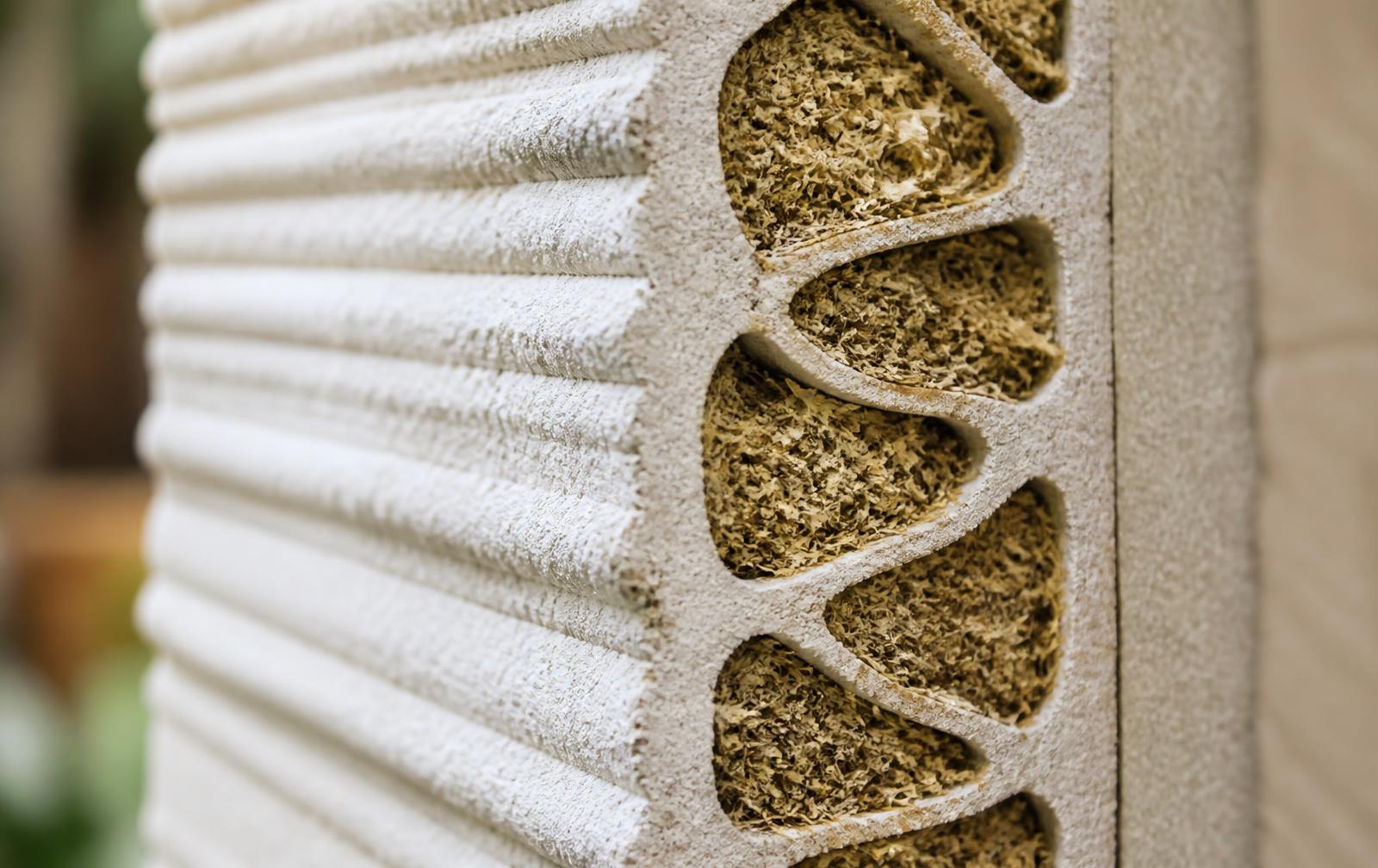
1 — Durable Printed Outer Shell
A low-carbon mineral/hemp composite designed for strength, weather exposure and dimensional stability. The binder can incorporate lime, supplementary pozzolanic materials, fly ash where technically and environmentally appropriate, calcined clay or metakaolin as future alternatives, and limited hydraulic binder where needed for performance.
2 — Hemp-Hurd Insulation Core
The internal wall cavities are filled with lightweight hemp hurd or a lightly bound hemp-based insulation. This layer handles thermal insulation, acoustic comfort, moisture buffering, reduced building weight and improved floating efficiency.
3 — Breathable Interior Finish
Lime plaster, a lime-hemp finish or another vapor-open natural finish creates a breathable interior surface compatible with the hemp insulation layer.
The printed mineral shell provides durability and weather resistance. Waterproofing and moisture management are handled through dedicated protective layers and architectural detailing.
Explore the wall, layer by layer
- Exterior
A low-carbon mineral/hemp composite printed with internal cavities rather than as a massive solid wall. Optimized for compressive strength, abrasion resistance, low capillary absorption and dimensional stability.
- Interior
3D-printed hemp-mineral composite shell
A low-carbon mineral/hemp composite printed with internal cavities rather than as a massive solid wall. Optimized for compressive strength, abrasion resistance, low capillary absorption and dimensional stability.
- Printed for strength
- Hemp for insulation
- Lime for breathability
- Dedicated moisture protection
Durable mineral shell outside. Lightweight hemp insulation inside.
A Smarter Hemp Wall
Instead of asking one hempcrete mixture to provide structure, waterproofing, insulation and durability simultaneously, Floating Future separates these functions into a layered building envelope.
The outer printed shell is optimized for strength and weather exposure. The hemp-hurd core is optimized for insulation and low weight. The interior finish remains breathable and healthy.
More Durable
Optimized outer mineral layer for exposure and impact.
Lighter
Hemp hurd remains a low-density insulation layer instead of becoming a heavy structural material.
More Breathable
The interior envelope can remain vapor-open.
Easier to Optimize
Structure, insulation and moisture management can be tested and improved independently.
Low-Carbon Binder Development
Floating Future is exploring low-carbon binder systems combining lime with supplementary mineral materials such as fly ash, calcined clay and metakaolin. These materials can potentially improve durability, strength and moisture resistance while reducing dependence on high-Portland-cement formulations.
Because fly ash is linked to coal-fired power generation, long-term material development should also prioritize scalable alternatives such as calcined clay and metakaolin.
Fly ash is one potential pozzolan, not the only one.
Fly Ash
Strong pozzolanic performance and circular use of an industrial by-product, but future supply may decline.
Calcined Clay
A more future-proof mineral feedstock with strong potential for low-carbon binders.
Metakaolin
A high-performance pozzolan useful for durability and binder optimization.
A Lightweight Foundation for Life on Water
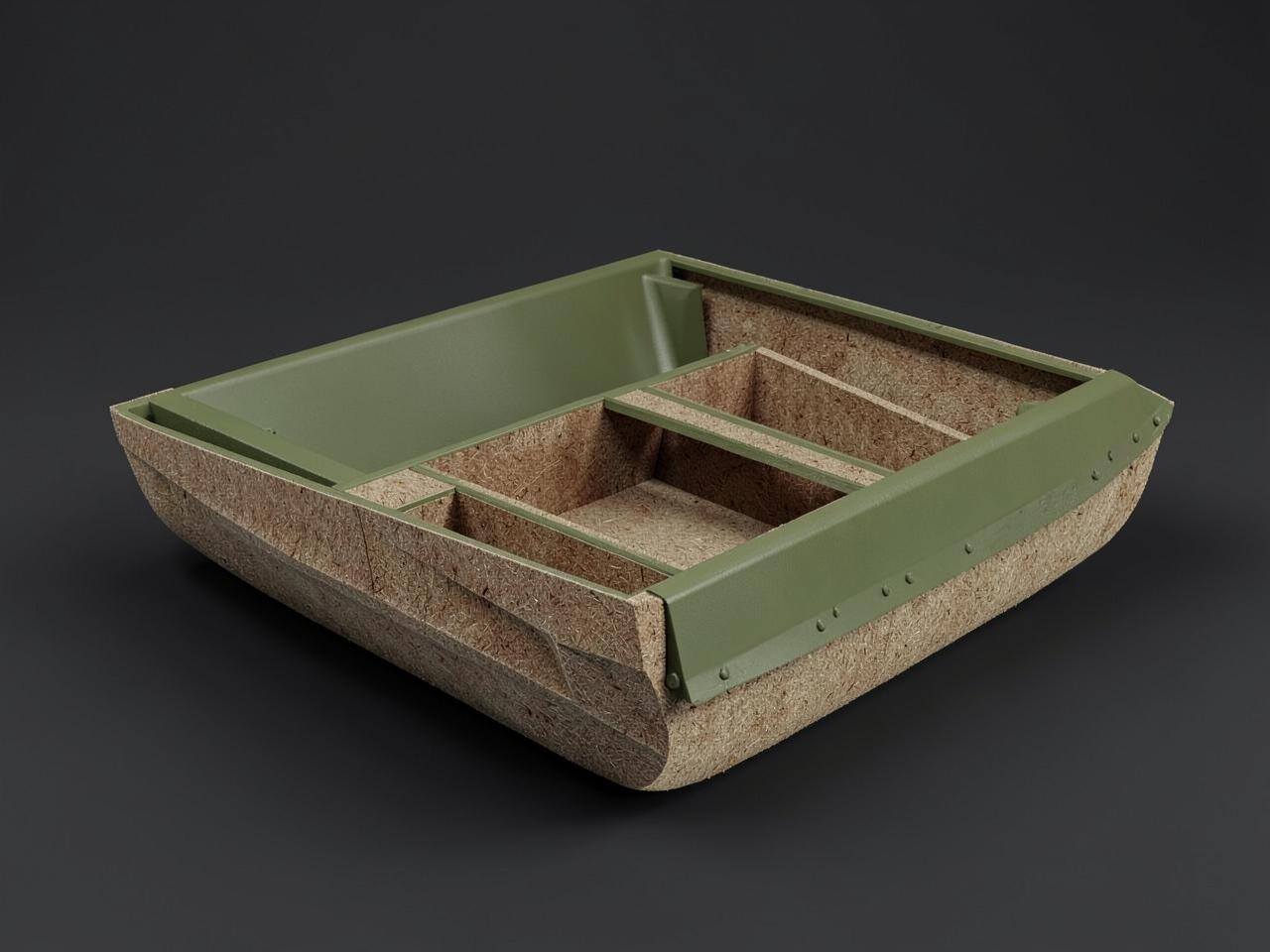
- Hemp-fiber bio-composite structural skins
- Closed-cell buoyancy core
- Internal ribs
- Watertight bulkheads
- Marine-grade coatings
- Sacrificial impact zones
- Service channels
Technical note: Hemp-fiber composites can potentially replace part of conventional glass-fiber content, but long-term immersion, fatigue, fire, UV, salt exposure and structural performance must be validated through engineering and certification.
The chassis should initially be treated as a certified marine structure independent from the building envelope above.
Marine engineering below. Bio-based architecture above.
Light Where Weight Matters Most
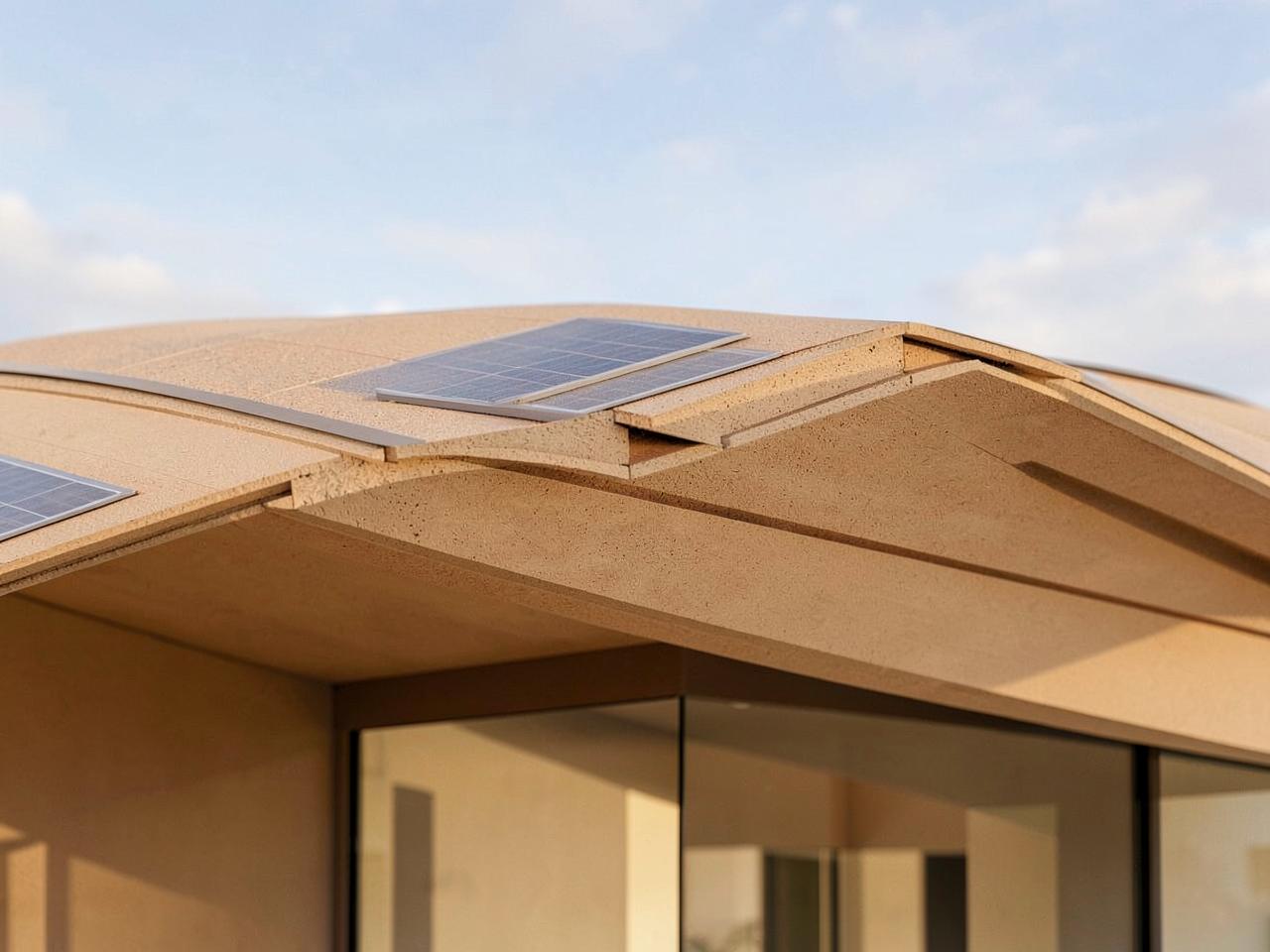
A floating building benefits from keeping mass low, particularly above the waterline. Floating Future therefore uses a lightweight curved roof rather than a massive printed dome.
- Lower center of gravity
- Improved stability
- Reduced pontoon displacement
- Easier solar integration
- Easier waterproofing
- Easier replacement and maintenance
- Curved hemp-fiber sandwich panels
- Structural ribs
- Hemp-fiber insulation
- Waterproof membrane
- Integrated solar
- Rainwater collection
- Optional green roof zones
- Lightweight
- Replaceable
- Energy Ready
- Durable
Designed around what water demands.
- Lower Carbon
- Flood Adaptive
- Modular & Scalable
- Rapid Fabrication
- Energy Ready
- Healthy Indoor Climate
- Relocatable
- Biophilic Design
Three sizes. One engineered platform.
The chassis, envelope and factory process stay the same. Footprint, layout and dock interface change with how you want to live on the water.
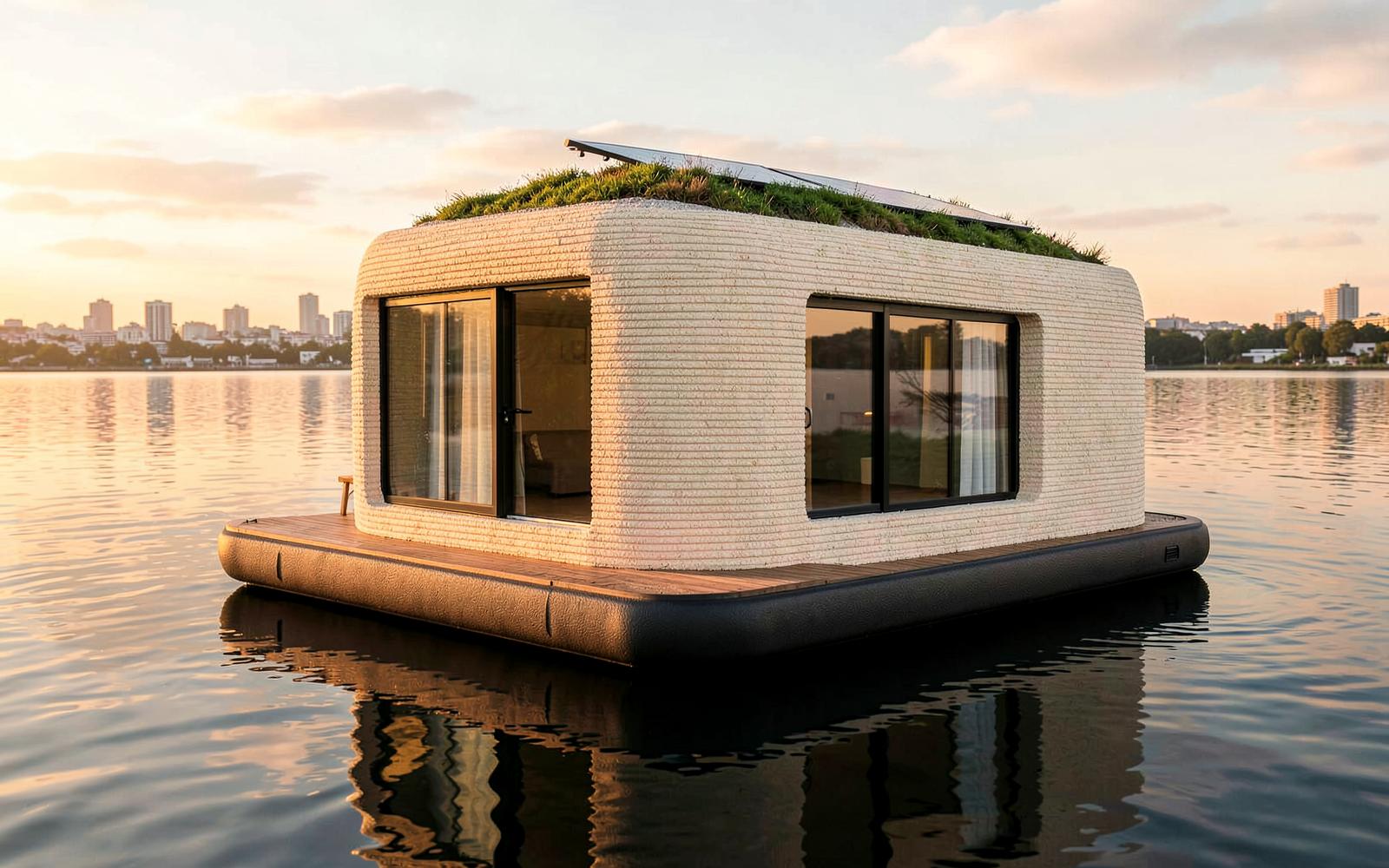
SOLO
approx. 45 m² · 1 bedroom
One module. One life on water.
from EUR 195,000
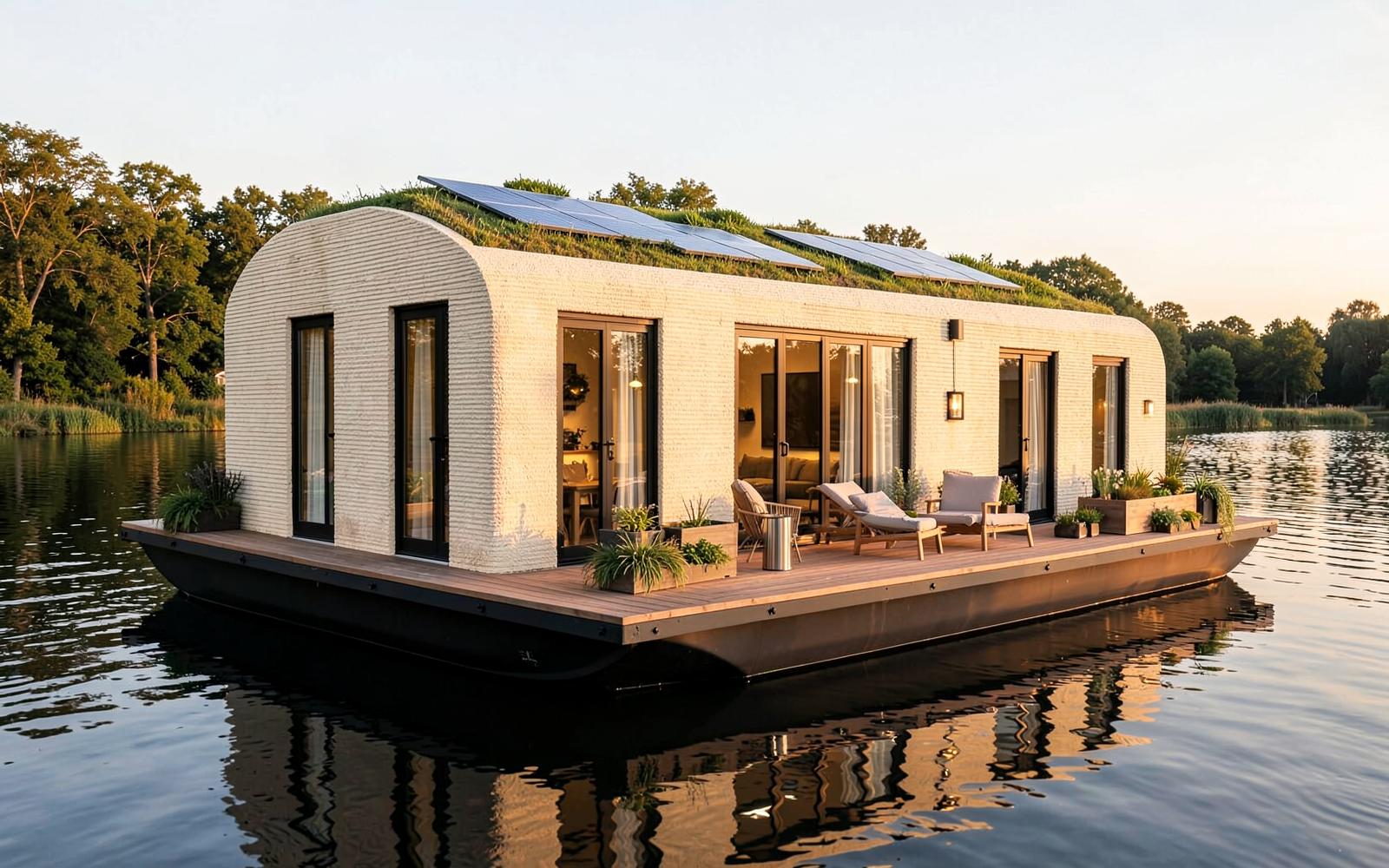
FAMILY
approx. 78 m² · 2–3 bedrooms
Room to grow, still light on the water.
from EUR 315,000
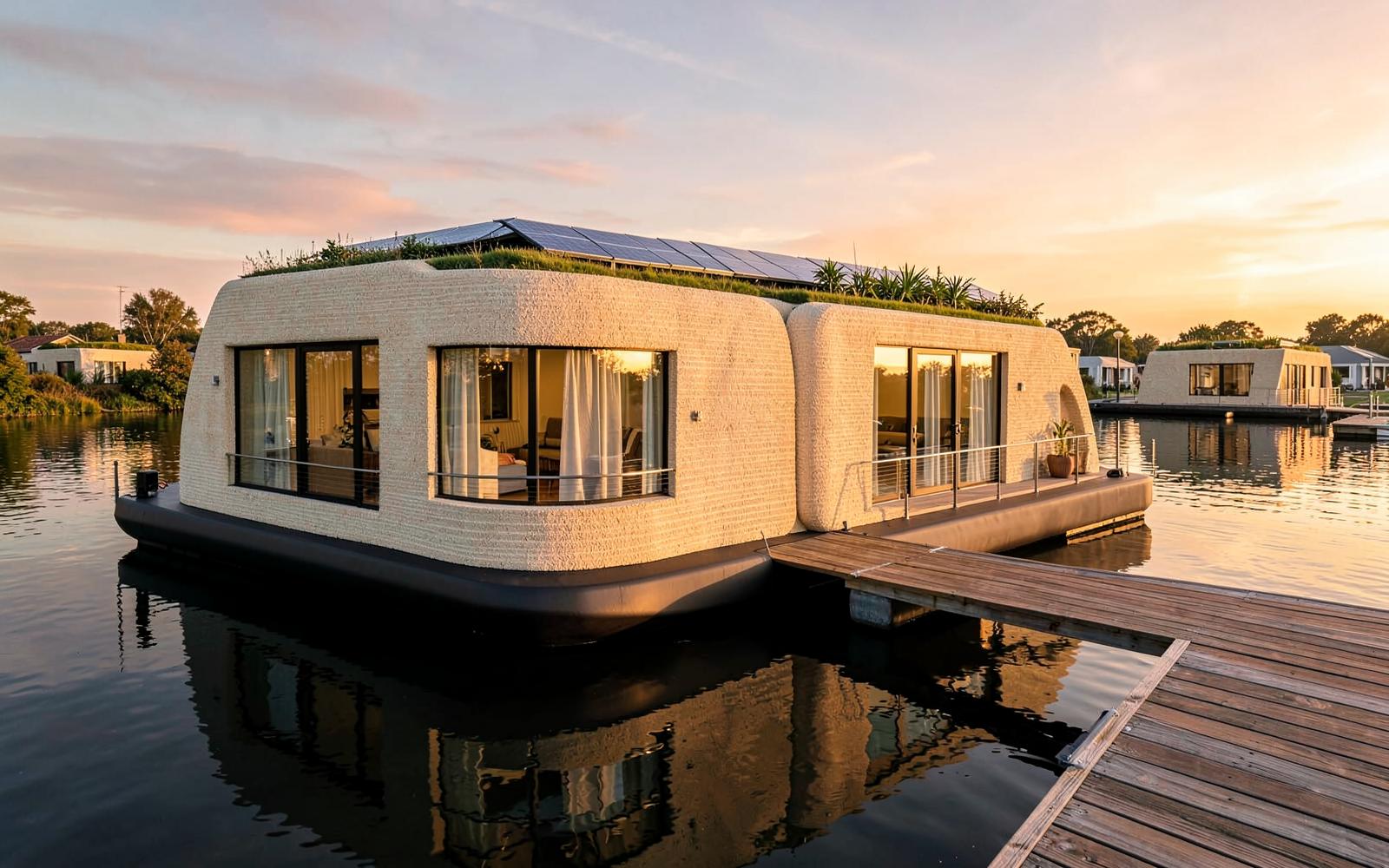
COMMUNITY+
approx. 115 m² · 3–4 bedrooms
Built to join a neighborhood.
from EUR 465,000
Start with one home. Grow into a floating neighborhood.
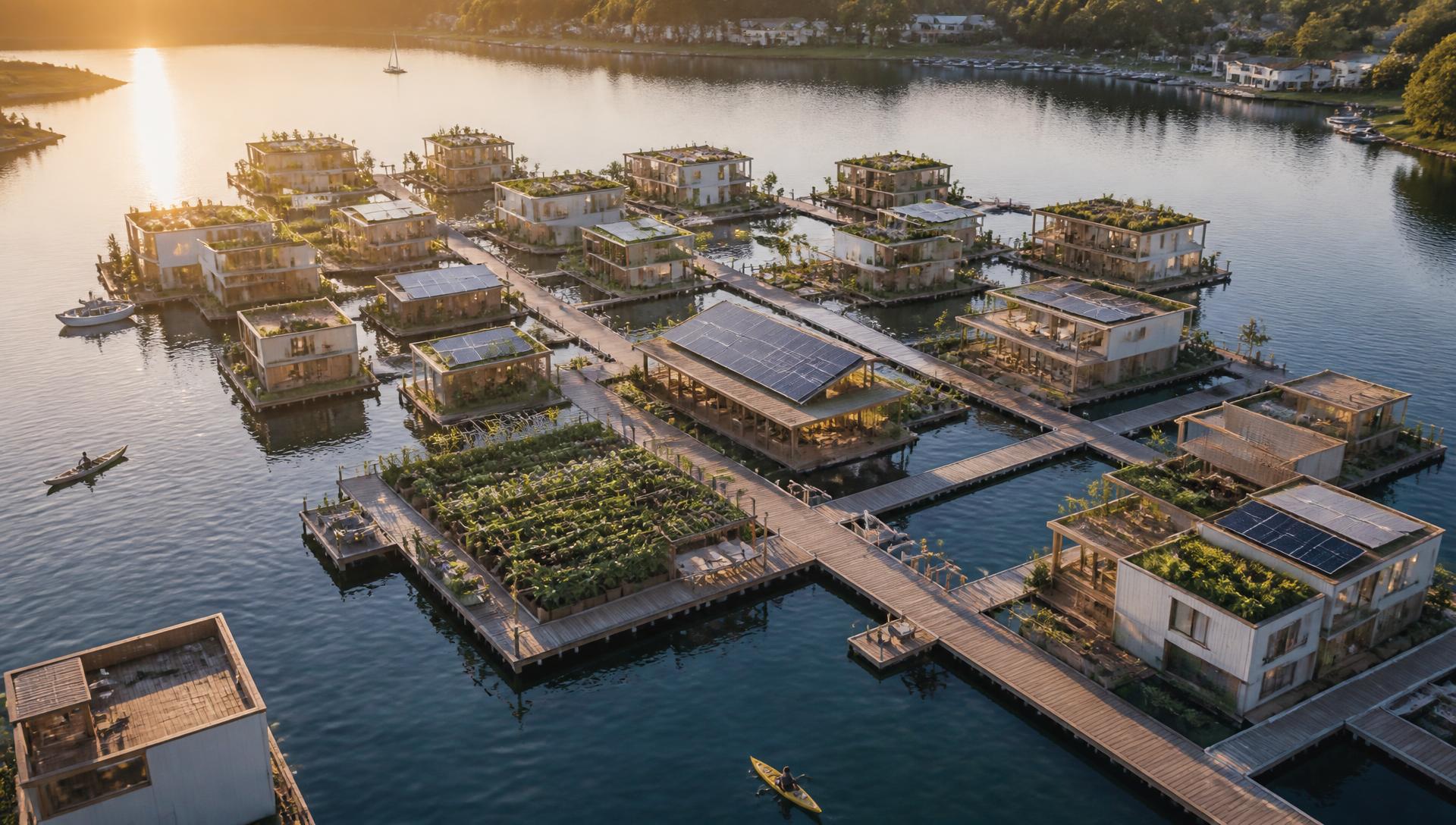
- Shared docks
- Pedestrian circulation
- Renewable energy microgrids
- Battery storage
- Water and wastewater infrastructure
- Community gardens
- Shared amenities
- Emergency access
It rises and falls with the water.
Rather than resisting every change in water level with increasingly massive flood defenses, the floating foundation is designed to rise and fall with the water.
Low Water
Normal Water
High Water
Every material where it performs best.
Structure, protection and insulation are separated, so each material can be selected for one job rather than compromised across several.
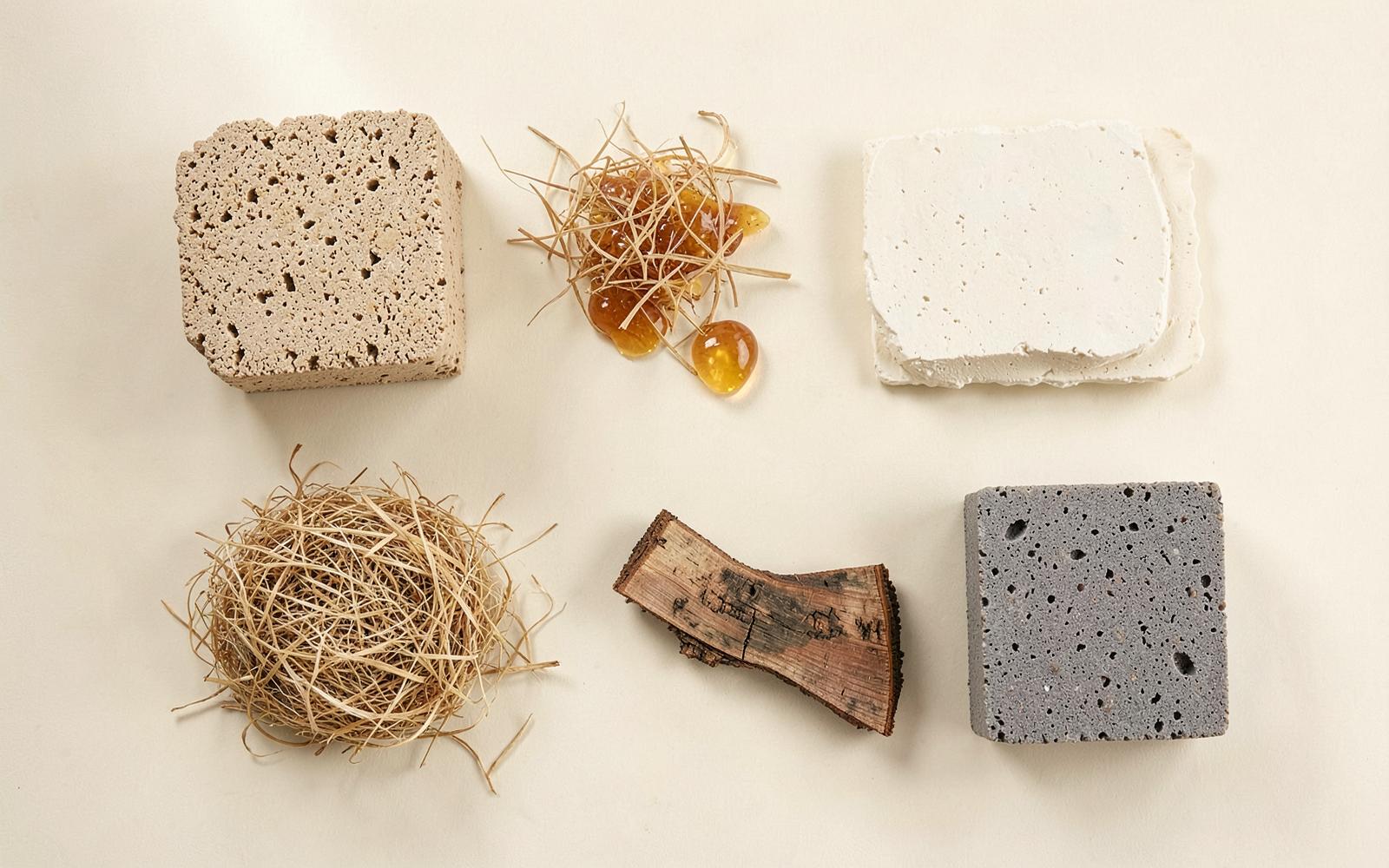
- Hemp-mineral composite
- Hemp hurd
- Hemp fiber
- Bio-based resin
- Lime plaster
- Reclaimed timber
- Recycled PET core
| Material | Primary function | Why it is used |
|---|---|---|
| Hemp-mineral printed composite | Outer envelope | Durability + digital fabrication |
| Hemp hurd | Insulation | Lightweight + thermal + acoustic |
| Lime | Interior / binder | Breathability + mineral compatibility |
| Pozzolan | Binder enhancement | Strength + durability + lower cement demand |
| Hemp-fiber composite | Roof / selected chassis elements | Lightweight reinforcement |
| Recycled PET foam | Buoyancy core | Lightweight closed-cell flotation |
| Reclaimed / engineered timber | Interior + structural elements | Renewable, warm and lightweight |
Hemp-mineral printed composite
Outer envelope
Durability + digital fabrication
Hemp hurd
Insulation
Lightweight + thermal + acoustic
Lime
Interior / binder
Breathability + mineral compatibility
Pozzolan
Binder enhancement
Strength + durability + lower cement demand
Hemp-fiber composite
Roof / selected chassis elements
Lightweight reinforcement
Recycled PET foam
Buoyancy core
Lightweight closed-cell flotation
Reclaimed / engineered timber
Interior + structural elements
Renewable, warm and lightweight
Use every material where it creates the greatest technical and environmental value.
Designed to Be Tested
The development programme is defined up front. Each part of the platform has a measurable target and a route to certification.
Material
- Compressive strength
- Flexural strength
- Printed interlayer adhesion
- Thermal conductivity
- Vapor permeability
- Capillary water absorption
Envelope + durability
- Wet/dry cycling
- Freeze-thaw performance
- UV exposure
- Salt exposure
- Fire performance
- Composite fatigue
- Long-term natural-fiber durability
Marine
- Buoyancy
- Stability
- Wave loads
- Wind loads
- Mooring loads
Performance is measured, not assumed.
Concept platform, honestly stated.
Floating Future is a concept platform under development, not yet a certified construction system.
The final architecture will be developed through material testing, naval architecture, structural engineering, fire testing, moisture analysis and local regulatory approval.
Hemp-based materials provide valuable insulation, reinforcement and carbon benefits, but they are not relied upon as the sole waterproofing or marine protection system.
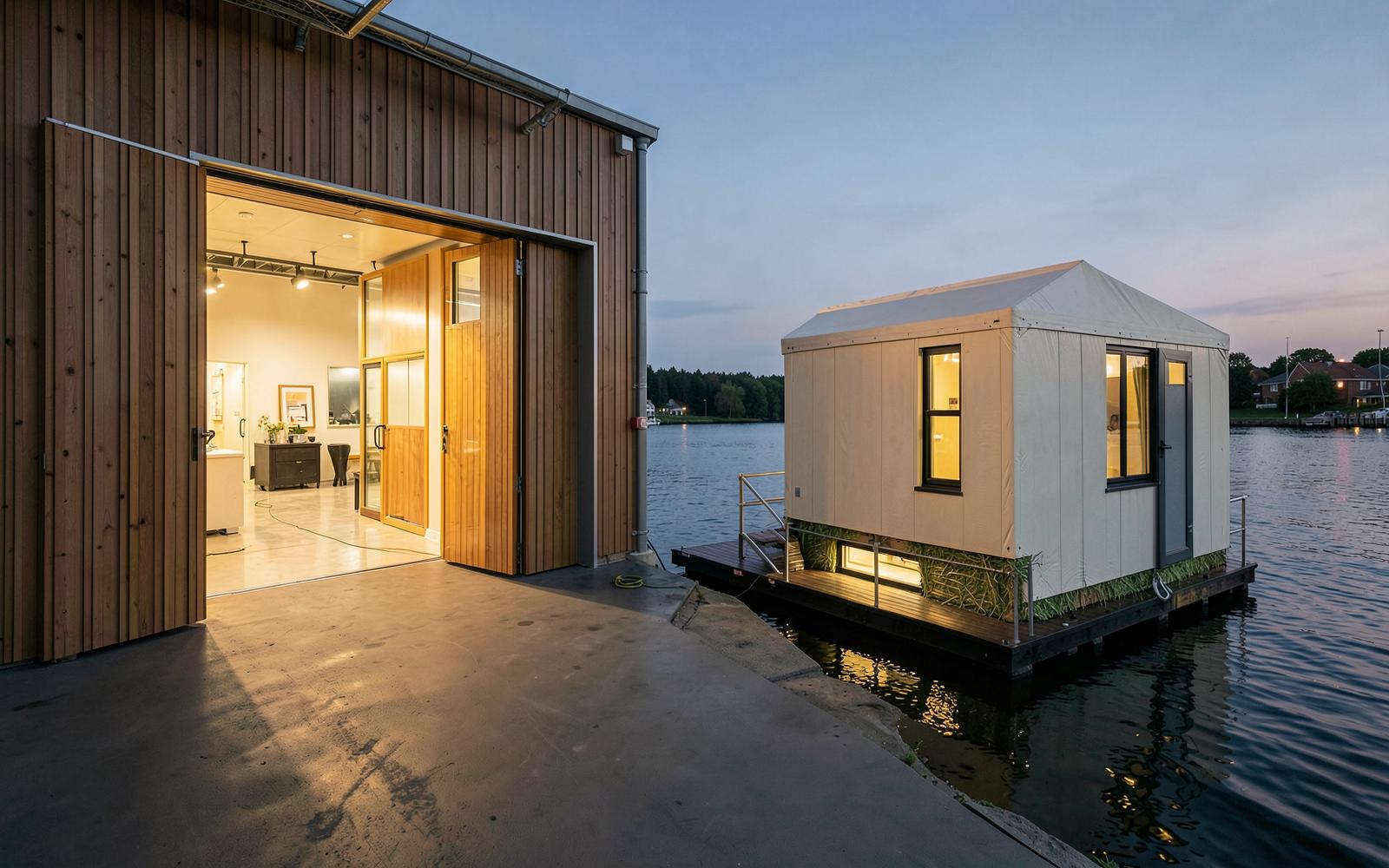
Built in controlled conditions. Launched ready to live.
Floating Future homes are designed to be manufactured almost entirely in a waterfront production facility rather than constructed piece by piece at the final site.
The floating chassis is fabricated and tested first, followed by the structural frame, the 3D-printed hemp-mineral envelope, hemp-hurd insulation, the lightweight bio-composite roof, glazing, interiors and building services — then a controlled cure before launch.
Once complete, the home is launched, tested on the water and towed to its destination.
Factory-built quality. Waterfront deployment. Minimal site disruption.
- 01Chassis
- 02Cradle
- 03Structure
- 04Printing
- 05Insulation
- 06Roof
- 07Fit-Out
- 08Cure
- 09Launch
- 10Tow
Built Light. Built Green. Built to Rise.
Floating Future brings together regenerative materials, advanced manufacturing and water-based urbanism to create a new category of climate-adaptive housing.